










































Saving Face
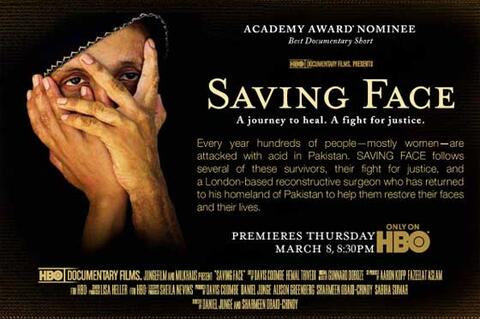
This initiative revolves around a 40-minute documentary film, "Saving Face", which is the story of two women from Southern Punjab, Pakistan, who are victims of acid attack. It portrays how a Pakistani-British doctor comes to treat them and also discusses the parliament's decision to pass a bill on acid violence. The purpose of the film and education and advocacy campaign surrounding it is to end acid violence in Pakistan and beyond.
Saving Face uses the medium of film, as well as the internet and other information and technologies (ICTs), as a strategy for advancing awareness, education, and prevention efforts. It is motivated by the observation that global audiences are largely unaware of the scope of the acid violence problem, and the populations most affected - women and children as well as the economically disenfranchised where illiteracy rates are high - do not have access to resources and services such as medical treatment or legal recourse. The film gives audience members a personal perspective on the issue and provides an understanding of the complexities involved in physical, emotional, and psychological recovery from these crimes. Specifically, the documentary is the story of two survivors of such attacks: Zakia is a 39-year-old woman who had acid thrown on her by her husband after filing for divorce. She vows to find justice, alleviate pain, and restore functioning and features to her face. Rukhasana is a 23-year old woman who was attacked by her husband and in-laws and was forced to reconcile with them. In addition, the film illuminates constructive paths to alleviating the phenomenon, including the need for government action, both through legislation to criminalise acid attacks and legislation to require companies producing acid to adhere to corporate responsibility standards.
The Saving Face outreach plan combines:
- Web and social media platforms to connect community members with information, resources, and one another. Visitors to the Saving Face website can learn how to get involved in the campaign to eradicate acid violence, such as by hosting a screening of the film to inform others.
- Localised strategies for reaching those most at-risk for being affected, beginning in Pakistan through radio and television campaigns.
- Awareness, education, and prevention-focused screenings and materials, including pamphlets and a film viewer's guide.
Women, Children, Gender-Based Violence.
Acid violence is the deliberate use of acid to attack another human being. It is estimated that some 80% of victims are women and almost 40% are under the age of 18. Attackers often target the head and face in order to maim, disfigure, and blind. The act rarely kills but causes severe physical, psychological, and social scarring, and - according to organisers - victims are often left with no legal recourse, with limited access to medical or psychological assistance, and without the means to support themselves. "In many countries acid attacks constitute a 'hidden' form of violence against women and children that often goes unreported even though the visible signs of the crime are difficult to overlook....In many countries, women are victims of acid attacks when they allegedly or actually transgress hegemonic gender norms and roles that discriminate against women and keep them in subordinated positions....To eradicate acid violence, governments must address its root causes - inequality and discrimination against women, provide redress to victims, including compensation for healthcare costs, limit the availability of acid, appropriately punish perpetrators and support women’s empowerment to enhance their self-confidence and ability to sustain independent livelihoods."
The filmmaker, Sharmeen Obaid-Chinoy, was born in Pakistan in 1978, spent time being educated and making films in the United States, and then returned to her native Pakistan. In February 2012, the film won the Academy Award for Best Documentary Short in the United States and will broadcast internationally in 2012, beginning with HBO in North America and Channel Four in the United Kingdom (UK).
Pakistan Defence website and Saving Face website - both accessed on February 28 2012.
- Log in to post comments