










































Should Low-Income Countries Impose the Same Social Distancing Guidelines as Europe and North America to Halt the Spread of COVID-19?
Yale University and Yale Research Initiative on Innovation and Scale, or Y-RISE (Barnett-Howell); Yale University, Y-RISE, National Bureau of Economic Research (NBER), Centre for Economic Policy Research (CEPR), and International Growth Centre, or IGC (Mobarak)
"As social distancing becomes a universal strategy to combat COVID-19, a question emerges: Are the shuttering of the economy for weeks or months and mass unemployment reasonable costs to pay?"
In response to a pandemic like COVID-19, two strategies frequently pursued are: mitigation, which focuses on slowing but not necessarily stopping epidemic spread, and suppression, which seeks to reverse epidemic growth, reducing case numbers to low levels and maintaining that situation indefinitely. The latter rests on approaches such as social distancing. This research combines country-specific economic estimates of the benefits of disease avoidance with an epidemiological model that projects the spread of COVID-19 to analyse whether the social distancing interventions being implemented in places like North America or Europe are equally justified in low- and middle-income countries (LMICs).
To determine the relative value of suppression strategies, the researchers embed estimates of the country-specific costs of mortality developed by Viscusi and Masterman (2017) into the epidemiological model developed by the Imperial College London (ICL) COVID-19 Response Team. The modeling exercise yields the following key insight:
- The economic value generated by equally effective social distancing policies is estimated to be 240 times larger for the United States (US), or 70 times larger for Germany, compared to the value created in Pakistan or Nigeria. The value of benefits estimated for each country translates to a savings of 59% of US gross domestic product (GDP) and 85% of German GDP, but only 14% of Bangladesh's GDP or 19% of India's. This can be explained by the fact(s) that:
- The proportion of the population that is elderly (and, thus, at a higher risk for more serious COVID-19 illness and death) varies greatly between low-income (3%) and high-income countries (17.4%). (The latter tend to have low fertility rates.) COVID-19 mortality effects are therefore predicted to be much larger there in high-income countries than in economically poor countries, even after accounting for differences in health system capacity.
- Social distancing saves lives in economically rich countries by flattening the curve of infections, to reduce pressure on health systems. Delaying infections is not as useful in countries where these systems are already overwhelmed, and the number of hospital beds and ventilators is limited and not accessible to most.
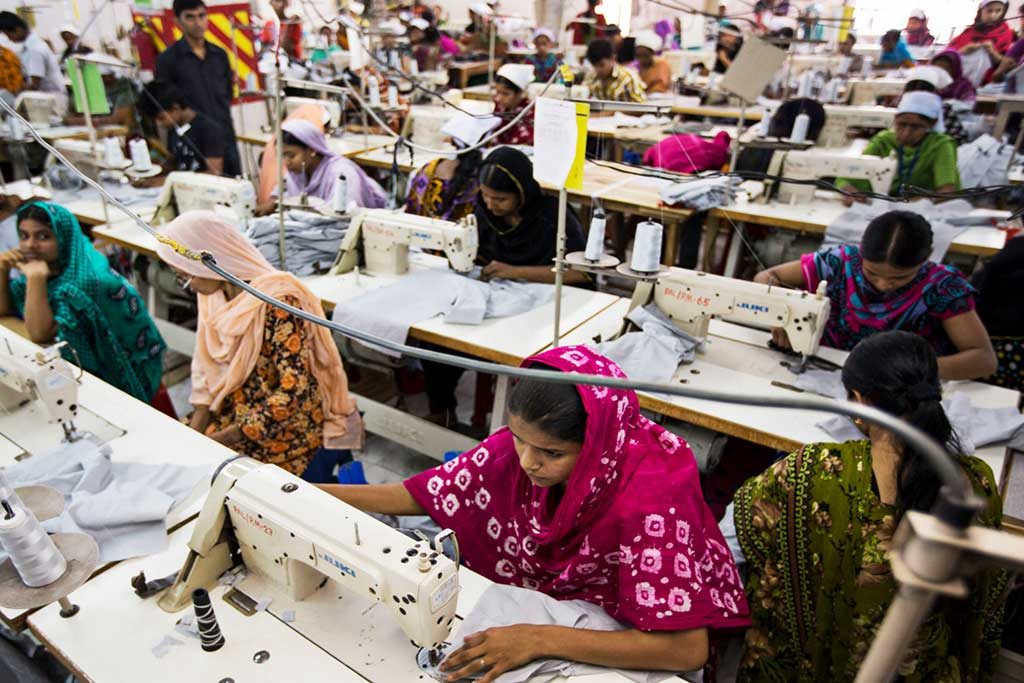
- People with smaller incomes may place relatively greater value on their livelihood concerns compared to concerns about contracting coronavirus. Many more workers in economically poor countries are self-employed or in the informal sector and lack the resources and social protections to isolate themselves from others and sacrifice economic opportunities until the virus passes. By limiting their ability to earn a living, social distancing can lead to an increase in hunger, deprivation, and related mortality and morbidity in economically poor countries.
- LMICs may have limited capacity to enforce distancing guidelines, and lockdowns may have counterproductive effects if it forces informal sector workers and migrants to reverse-migrate from densely populated urban areas and spread the disease to remote rural areas.
The researchers call for the source code for the ICL model on which their analysis is based to be made available so that "social scientists can explore the sensitivity of benefit estimates to changes in assumptions about compliance with distancing guidelines, enforcement capacity, and other behavioral adjustments."
According to the researchers, the model presented here can be used to explore quantitatively the benefits of alternative policies, including widespread social influence and information campaigns to encourage behaviours that slow the spread of disease but do not undermine economic livelihoods - for example, programmes to encourage community and religious leaders to endorse safer behaviours and communicate them clearly.
Yale School of Management website, April 20 2020. Image credit: Vedas Shaakha
- Log in to post comments