










































Tales of Resettlement
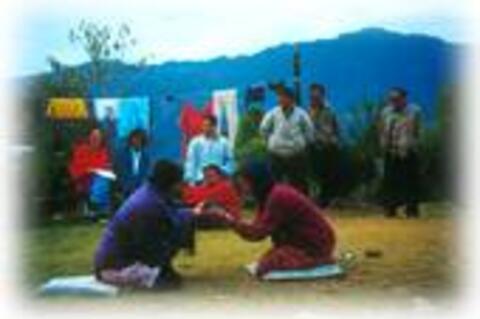
Interpersonal communication forms the centrepiece of this oral history initiative. Each project, to date, involved a training workshop for interviewers, followed by testimony collection in the field, transcription of the tape-recorded interviews in the language of interview and, later, translation into English as well. Most of the interviewers were members of the displaced communities; a few were fieldworkers working with the resettled. A range of community and national activities, in local and national languages, were developed to expose people to the testimonies. These activities included policy roundtable meetings, community debates, press conferences, and local language publications.
Ulimately, Panos London hopes to develop an online archive of these life stories, which is similar to Mountain Voices, as a way to share the full collection of testimonies and accompanying material with an international audience of policymakers, non-governmental organisations (NGOs), students, and academics working on related issues.
In the meantime, Panos London has created PDF versions of their partners' publications, which are available together with an introduction from Panos London on their website: click here. Many of the partners produced an English version of their publication or Panos London translated the local/national publication into English.
As of July 2008, Panos London is exploring approaches and funding to more widely communicate these testimonies to international audiences - for example, through an online archive similar to the Mountain Voices one referenced above and/or through a radio docudrama. They welcome suggestions from interested parties.
Rights, Displacement.
Panos London, SUNGI Development Foundation (Pakistan), Panos India, Panos Eastern Africa, Panos Southern Africa, Kuru Development Organisation (Botswana).
Emails from Panos London to The Communication Initiative on May 2 2007, July 10 2008, and December 7 2009; and Panos London website.
- Log in to post comments