










































Through the Voice of Faith: Learnings to Inspire Domestic Violence Prevention through Faith Institutions
Image
SummaryText
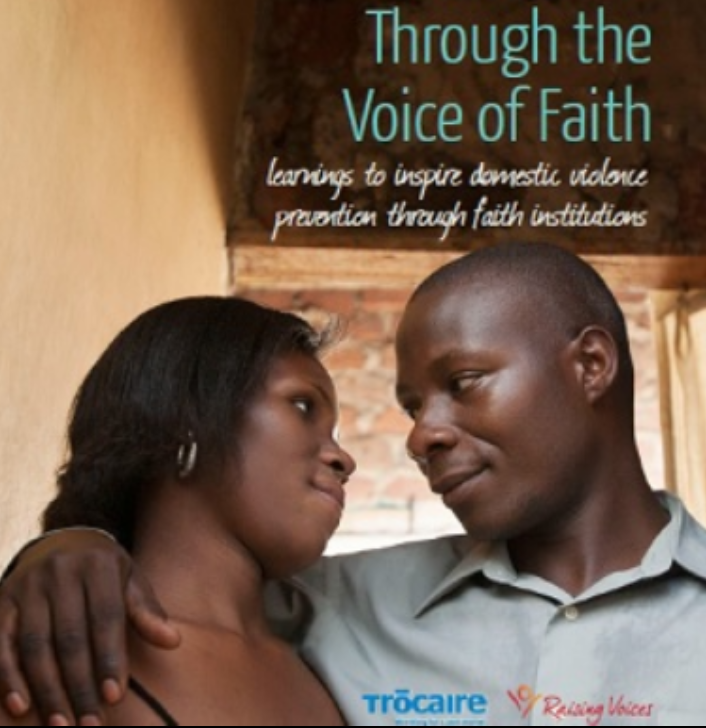
This Learning Paper describes the experience and lessons learned from a domestic violence prevention initiative driven through the voice of the Catholic Church of Uganda. According to the paper, learning from this initiative has provoked broad reflection about the power of faith in many countries of the Global South, and thus the potential of accelerating positive change at scale through effective collaboration with faith institutions. The initiative brought together partners Trocaire and Raising Voices, and applied the SASA methodology used by Raising Voices.
The initiative was based on research findings that pointed to faith institutions as central to Uganda society, but almost completely lacking any focused intervention. To create a successful initiative with the Catholic Church, it was important to first gain the support of the Catholic Church leadership, and second, to find a respected methodology for domestic violence prevention. The paper explains that the SASA methodology is an exploration of power — what it is, who has it, how it is used, how it is abused, and how power dynamics between women and men can change for the better. SASA! is designed to support community members in spearheading social norm change for the prevention of violence against women and HIV. SASA! consists of four phases:
The paper explains that for the first year, the most critical step was taking conceptual, Catholic commitments to family, peace, harmony and justice, and connecting these to a practical understanding of women’s lived realities. This equally applied to training for clergy, who were working largely from broad conceptual understandings and biblical text. Prayer cards also became central to the national campaign, because every Catholic in Uganda who goes to church gets one. The initiative had some challenges, for example in engaging in discussion about condoms, and because the methodology is intended for grassroots organisations, not institutions. However, overall the pilot pointed to faith institutions as a valuable channel for communication. For example, while everyone was approaching domestic violence in a different way, the initiative has helped produce a common, a consistent message.
The initiative was based on research findings that pointed to faith institutions as central to Uganda society, but almost completely lacking any focused intervention. To create a successful initiative with the Catholic Church, it was important to first gain the support of the Catholic Church leadership, and second, to find a respected methodology for domestic violence prevention. The paper explains that the SASA methodology is an exploration of power — what it is, who has it, how it is used, how it is abused, and how power dynamics between women and men can change for the better. SASA! is designed to support community members in spearheading social norm change for the prevention of violence against women and HIV. SASA! consists of four phases:
- During the Start phase, community participants are encouraged to begin thinking about violence against women and HIV as interconnected issues and foster power within themselves to address these issues.
- The second phase of SASA! aims to raise Awareness about how communities accept men's use of power over women, fuelling the dual pandemics of violence against women and HIV.
- The third phase focuses on how community members can Support the women, men, and activists directly affected by or involved in these interconnected issues, by joining their power with others.
- During the final phase, men and women take Action, using their power to prevent violence against women and HIV.
The paper explains that for the first year, the most critical step was taking conceptual, Catholic commitments to family, peace, harmony and justice, and connecting these to a practical understanding of women’s lived realities. This equally applied to training for clergy, who were working largely from broad conceptual understandings and biblical text. Prayer cards also became central to the national campaign, because every Catholic in Uganda who goes to church gets one. The initiative had some challenges, for example in engaging in discussion about condoms, and because the methodology is intended for grassroots organisations, not institutions. However, overall the pilot pointed to faith institutions as a valuable channel for communication. For example, while everyone was approaching domestic violence in a different way, the initiative has helped produce a common, a consistent message.
Languages
English
Number of Pages
24
Source
Raising Voices websiteon October 10 2013.
- Log in to post comments