










































TME Technology and Goodwill Social Work Centre Life Skills
Goodwill Social Work Centre (GoodwillSWC), a non-governmental organisation (NGO) in Madurai, India, combines social philanthropy, professional social work, and social development. Their partnerships, particularly with Global Links Initiative (GLI) of the United Kingdom (UK) and Thare Machi Education (TME), UK, have resulted in a number of types of linked programmes in life skills and livelihood training for children and youth from 13-35 years old.
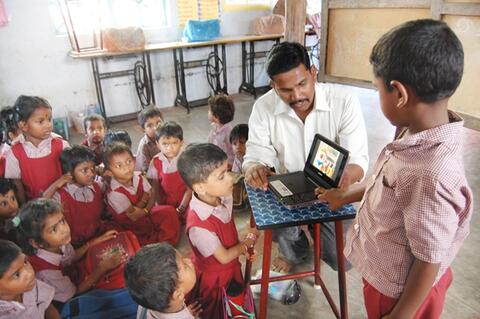
From July 2012-June 2013, GoodwillSWC partnered in a project to provide non-formal employment training for children and youth in 40 villages through audio-visual lessons on basic health and life skills, subjects developed by TME. TME donated a DVD player and a set of 27 interactive DVD lessons in the Tamil language to the GoodwillSWC, which took them to classrooms and community groups, including Dalit communities, agricultural communities, families of low socioeconomic status, working youth, and children and youth from dysfunctional families.
The types of programmes include:
- Computer training programmes
- Sewing and embroidery (dress making and designing)
- Zurdhosi (needle craft work) and handicraft work
- Life enrichment education & life skills-based hygiene education for children and young people
- Family support services, namely:
- crisis intervention and counselling services for stressed families of youth
- resourcing (offering information) and advocacy health promotion programmes for youth
- job search and placement for youth and eligible family members
- youth and family fellowship meetings
- good parenting skills development programmes
The training sessions use computer, audio-visual, and print formats. Certificates are awarded for completion, and the GoodwillSWC looks for placement in jobs and further job training.
- The centre works on micro-enterprise development including sewing, dress making, embroidery, needle craft work, and textile printing and offers sewing machine purchase support. It is organising a training in sewing machines repairing and maintenance.
- GoodwillSWC is enriching computer training for employment by adding further training modules.
- As part of the capacity building programme for youth and women beneficiaries, the centre has conducted a series of interactive sessions on interpersonal relationships to increase personal competencies in the areas of understanding self, perception, listening, communications, problem solving, team work, etc.
- In association with the TME health modules, the centre has been conducting periodical oral hygiene awareness programmes with the help of a dentist. Free medical camps and referral services are in place with some financial assistance, wherever needed, for beneficiaries, especially children.
- 'Life skills-based hygiene education' for children and young people covered under the project promotes good hygiene behaviours associated with the prevention of water- and sanitation-related infectious diseases among children. The themes include: environmental health rights; water, sanitation and waste; personal and food hygiene; water- and sanitation-related diseases; and sanitation and hygiene within schools, households, and communities.
Children, Youth, Health
According to GoodwillSWC, through an employment training programme with family support services from 2000-2005, 180 male and female youth from dysfunctional families who were offered vocational training in two wheeler repairs and mechanics and tailoring and textiles are presently being employed.
Click here to view slides of the learning opportunities using TMEK's technology in classrooms.
OZ CHILD-Children Australia Inc.; SIMAVI, The Netherlands; Global Links Initiative (GLI) UK; Thare Machi Education (TME), UK
GLI [UK] - Goodwill [India] Partnership Initative report in PDF format and the GoodwillSWC website, March 18 2014, and email from Dr. Daniel to The Communication Initiative on March 19 2014.
- Log in to post comments