










































Tomorrow is a New Day Project
Tomorrow is a New Day is an 18-month violence-reduction project which seeks to promote stability in the Niger Delta through community reconciliation and the peaceful reintegration of ex-militants. Led by Search for Common Ground, this includes community-level dialogues, facilitating structures that encourage collaborative problem solving and inclusive decision making, using community radio to promote discussions, and producing a serial radio drama. The programme is intended to complement Nigeria's federal Amnesty Programme and is focusing on 7 communities which are meant to act as "trend-setting" models of non-violence in the Delta.
The overall goal of Tomorrow is a New Day is to bring a greater sense of security and empowerment to the Niger Delta. A key approach is to seek participation from community stakeholders in all activities, to ensure that the full community is represented, especially historically marginalised groups. In addition, the programme works to build the capacity of both individuals and communities to better prepare them to resolve future inter/intra-communal conflicts without outside assistance.
. The project includes the following key activities:
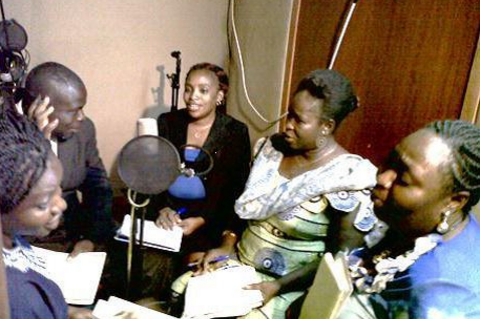
- Radio Drama - produced in pidgin English, the Sweet Motherland radio drama recounts the story of people living in the Niger Delta and the challenges that their communities face. These challenges range from issues of unemployment, to environmental degradation and inter-communal clashes. The radio series is produced by the African Radio Drama Association (ARDA) and is designed to help address rumours and misinformation that can fuel violence. Through entertaining, balanced, and diverse media, the project intends to provide opportunities for individuals and communities to understand concerns, challenges, and success stories about reintegration and reconciliation. Click here to listen to to some of the episodes online.
- Community Reintegration - to help ensure long-term stability, the project team is building the capacity of communities to resolve communal conflict. Through the project's activities, foundations for a stronger civil society will be developed in and among communities which are designed to encourage communities to see amnesty as something that empowers not only ex-militants, but everyone.
- Community Radio - SFCG and its partners will establish six community radio stations to give voice to members of the community, including the historically marginalised, and to address the rumours and misinformation that fuel violence. According to the project team, radio can be a powerful tool to inspire and empower change and is especially helpful in reaching large segments of illiterate or semi-literate populations.
- Trauma Healing Activities - Qualified psychology professionals will assess persisting traumas in the community and organise trauma healing activities in response. Activities are locally tailored and culturally appropriate and include small group discussions, storytelling or video discussions; ceremony activities; and/or artistic activities such as drumming, theatre or dance.
Local Project Committees (LPCs) are being organised to build reconciliation in communities. Referred to as "Solidarity Events", these are local projects designed to provide concrete experience of cooperation among different groups. These projects address some of the root causes of conflict in the communities that were identified during the baseline assessment by focusing on building up community infrastructure and development. Solidarity events also offer an opportunity to show communities members that they have the ability and a responsibility to improve their own communities, instead of waiting for action from the federal government and oil companies.
People can interact with the project through the Tomorrow is a New Day Facebook page, and stay updated via the project blog.
Peace-building
Search for Common Ground (SFCG), African Radio Drama Association (ARDA), Centre for Environment, Human Rights and Development (CEHRD), Institute for Media and Society (IMESO), Niger Delta Professionals for Development (NIDPRODEV), Stakeholder Democracy Network (SDN), Developing Radio Partners (DRP), European Union
Tomorrow is a New Day website on July 20 2012.
- Log in to post comments