










































"Woman to Go" Anti Sex-Trafficking Campaign

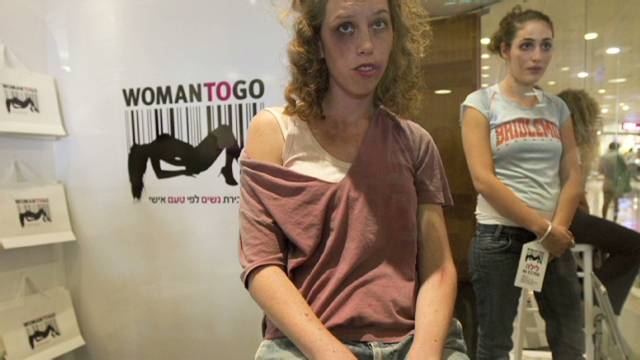
The unusual "window display" is designed to shock people, as they go about their shopping, into recognising in a very vivid way what it means to commodify human beings - in particular women, who are often the victims of sex trafficking. In addition to the display, people can go to the Woman to Go website to look at the girls "for sale". To further radicalise the message of the platform, campaign organisers used a product comparison website in which the "buyer" could compare the range of different women. When a "buyer" chooses a woman by clicking the mouse on her image, the buyer is led directly to a petition to pressure the Israeli Justice Ministry to back legislation that makes it a crime for men to patronise prostitutes.
Women, Rights.
According to organisers, over the past decade, about 10,000 women have been trafficked into Israel. The women are locked, beaten, raped, starved, and forced to receive 15-30 men a day 365 days a year, according to campaigner and attorney Ori Keider. About 3 years ago, Israeli police greatly reduced women trafficking by pouring resources into the problem. Security forces have also helped by stepping up patrols on the Israeli-Egyptian border as a result of al Qaeda presence in the Sinai. This 300-kilometer border was the main route for smuggling women into Israel, Keidar said. "This legislation against the customers will bring a further reduction in trafficking and with a little more pressure we can make this go away", said Keidar.
"'Women for Sale' Store Highlights Sex Trafficking in Israel", by Shira Medding, CNN, October 24 2010 - forwarded to the Women's United Nations Report Network (WUNRN) listserv, October 27 2010; "Woman to Go: Highlighting Sex Trafficking in Israel, by Irit Hakim, Safe World Israel Correspondent; and the Woman to Go website, January 27 2011.
Comments

ind
thats very very very bad

- Log in to post comments