Young People for Non-Violence

Young People for Non-Violence explored how information technology (IT) can be used as a creative, educational, and catalytic tool for young people concerned about drug abuse and violence in their communities. Young participants (selected for the project based on their families' income scale) took part in regular weekend workshops in areas relevant to social and professional integration. Topics focused on sociology, history, ecology, information and communication technologies (ICT), and multimedia and media literacy. According to organisers, the use of ICT proved to be a key motivator of the initiative, with ITAI's support for community telecentres and community radios. Young people learned to document interviews, to write and lay out reports, and to produce audio and video clips.
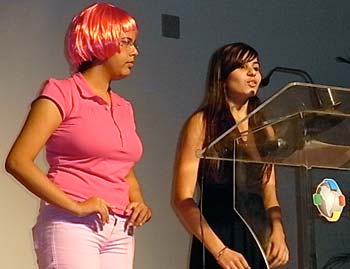
At the final project event, 70 Brazilians and 40 Paraguayans presented the results of their workshops and shared strategies for non-violence. The gathering was intended as a celebration of their collaboration to create a culture of non-violence in the 3-border region - Foz de Iguazú (Brazil), Ciudad del Este (Paraguay), and Puerto Iguazú (Argentina) - which reportedly has one of the highest tolls of violence and drug abuse among teenagers in Latin America. Specifically, the youth displayed a book, videos containing interviews with teenagers and other community members, photos, and modern and traditional dances. Presenters from UNESCO and a local non-governmental organisation ("Iniciativa Latinoamericana") reinforced the work of project participants by making pledges to support peace, reconciliation, and a culture of non-violence in Latin America and other regions.
Youth, Conflict, Technology.
May 2010 update: The project has continued, and now integrates young people from Puerto Iguazu, Argentina, as well.
ITAI, UNESCO.
UNESCO Asia and Pacific Regional Bureau for Education's News on ICT in Education, August 6 2009; "Fostering Culture of Non-violence through ICT", UNESCO; and email from Günther Cyranek to The Communication Initiative on May 27 2010.