










































Dealers/Troco

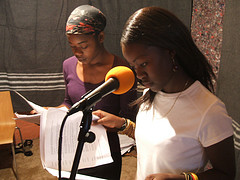
Entitled "Dealers" in Zambia and "Troco" in Mozambique, the story follows a family of women traders who are inadvertently caught up in a mafia scandal and an underground human trafficking ring. According to the organisers, through their experiences and the experiences of their neighbours and friends, listeners are encouraged to ask questions about a range of issues related to trafficking and migration.
In preparation for the development of Dealers/Troco, formative research was conducted which included interviews with 100 migrant people living in Johannesburg, South Africa. This research was used to bring out sub-themes like xenophobia, harassment, and corruption by police and immigration officials, as well as touch on the root causes of migration. The organisers state that having first-hand interviews was integral to keeping the story rooted in real experience.
The drama was workshopped in English with a team of scriptwriters and later adapted and translated into Portuguese for Mozambique. Both the initial story outline and the completed scripts were sent to various stakeholders in Zambia, Mozambique, and South Africa for feedback, with the aim of ensuring that the story and characters were applicable to both Zambia and Mozambique.
According to the organisers, careful adaptation was an important part of the development of Troco. IOM chose to adapt the Dealers storyline rather than create a new story, stating that it is relatively inexpensive to adapt a storyline to another country, thereby increasing the reach of the project without a great deal of additional expense. Producing an adapted drama is also a quicker process since most of the sound effects will be the same, with only a few changes or additions to localise the settings. However, key considerations had to be made to ensure that the adaptation of Troco was successful. Ensuring accurate language was vital, both in terms of translation as well as specific words and phrases, local sayings, and references. The adaptation needed to consider cultural differences, and changes to certain details were made accordingly. For example, Zambia is a transit country for trafficking from the Congo to South Africa, so in Dealers, one of the lead characters unknowingly assists in the trafficking of a Congolese girl. Mozambique is not a transit country for Congolese, so for Troco this was changed to a girl being trafficked from Northern Mozambique through Maputo to South Africa.
CMFD/IOM held focus groups in Zambia and Mozambique before recording began to make sure the drama was appealing and exciting, and that the characters and situations reflected reality. According to the organisers, feedback from the focus groups was overwhelmingly positive, with participants saying that they enjoyed the story, and that it reminded them that trafficking is a reality.
Accompanying the drama is a media guide that will give radio presenters or community organisations the information they need to initiate discussion about the characters and the issues they face. Radio stations will be encouraged to have live phone-in discussions after each episode, and additional activities are being considered, such as a text-message line where listeners can text their comments. The series also has a blog in both English and Portuguese. The series will air in English on radio stations across Zambia, and the adapted Portuguese version will air in Mozambique.
Human Rights, Gender, Human Trafficking, Migration.
Dealers/Troco is part of IOM's ongoing multi-media campaigns being implemented across Southern Africa by the Southern African Counter-Trafficking Assistance Programme (SACTAP), which seek to inform people about human trafficking, prevent vulnerable people from falling victim to traffickers, encourage people who have been trafficked to seek help, and advertise its free helpline numbers. The campaigns use print, film and television, radio, theatre, and media coverage to reach audiences across all sectors of the population. Since the campaign started, IOM has produced posters, flyers, stickers, and billboards that have been posted anywhere from border posts to inner-city streets. They have run both television and radio adverts in local languages, and have produced a documentary detailing South African trafficking trends.
In addition to airplay on radio stations in Mozambique and Zambia, the drama will also air on RDP Africa, a Portuguese language radio service that broadcasts in all Portuguese-speaking African countries.
International Organization for Migration (IOM), Community Media for Development (CMFD) Productions, Norwegian Embassy in South Africa, United States (US) Department of State, South African Department of Foreign Affairs.
CMFD website on May 29 2008 and November 25 2009; and Dealers blog on November 25 2009.

- Log in to post comments