










































Tin Tua
According to Tin Tua, their literacy programmes are adopted to local realities and needs and are based on bilingual instruction (proficiency in mother tongue before making the transition to French). The key to Tin Tua's work is community participation. Based on needs identified by villagers themselves, Tin Tua developed a curriculum in five local languages covering basic literacy and numeracy skills along with practical knowledge about health, hygiene, human rights, gender, and farming.
Facilitators follow three weeks of training to teach the programmes that run over the course of two sessions lasting between 50 and 75 days, each of 300 hours each. Learners are expected to make a financial contribution to participate. Once they have completed the full course, they can choose to continue with literacy classes in French – also developed by Tin Tua – making them eligible to sit for national exams.
The organisation has also set up a method used in the country's "satellite schools" that are designed to first teach children in their mother tongue and gradually make the transition to French. According to Tin Tua, this programme has helped improved the overall education system and build bridges between the formal and non-formal paths.
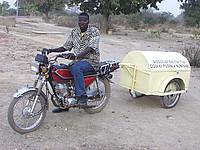
The programme has also set up mobile libraries.
Click here to view a video about Tin Tua.
Literacy, Rural Development
Tin Tua's programme reaches around 40,000 learners across 750 villages each year. The literacy rate in communities where Tin Tua works is 40%, well above the national average of 26%. The organisation was awarded one of the 2009 UNESCO King Sejong Literacy Prizes, which honour excellence and innovation in the field of literacy and non-formal education. The organisation is now sharing it's expertise with other African countries with low literacy rate, including Benin, Togo, Niger, and Mali.
According to Tin Tua, the programme has enabled farmers to better manage food production at the village level. It has also trained health workers, particularly around maternal health and staff say that girls who follow the programme are less likely to accept forced or early marriages.
UNESCO website and Swiss Agency for Development and Cooperation (SDC) website on February 5 2010.
- Log in to post comments