










































Hidden Violence: Protecting Young Children at Home
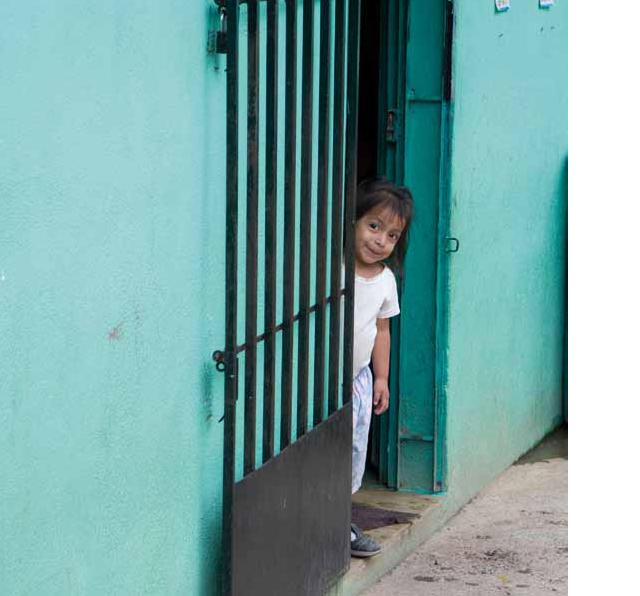
The articles in Issue 116 of Bernard van Leer Foundation (BvLF)'s Early Childhood Matters are grouped together due to the shared observation that violence is often "hidden": "This invisibility, and the deeply entrenched social norms and taboos that allow it to be perpetuated, speak to the injustice that violence in young children's lives represents."
Several articles stress the need for good data on how many young children are affected by violence and for better evidence about what works to tackle violence in the home. The data gaps are, for instance, described in an article by the United Nations Children's Fund (UNICEF) that outlines that organisation's two-pillar approach to child protection (pages 40-43), as well as in a World Health Organization (WHO) article advocating the importance of taking an evidence-based approach to preventing child maltreatment (pages 15–21).
A variety of initiatives and strategies are highlighted in these and other articles, such as the Together for Girls Initiative in sub-Saharan Africa, the multicountry Optimus study on child sex abuse, the Violence Prevention Alliance, the Child Protection Monitoring and Evaluation Reference Group, and the Africa Child Policy Forum and the Sexual Violence Research Initiative.
Taken as a group, the articles highlight some key messages:
- Engage in advocacy: For example, Marta Santos Pais, United Nations (UN) Special Representative on violence against children, deems crucial the strategy of "engaging with children, and by working with governments and other stakeholders, including parliamentarians, national independent human rights institutions, civil society actors, and regional and international organisations" to create change through legislation (pages 44-47).
- Tackle social norms: Examples from selected articles:
- Florence Bruce's description of the work of the Oak Foundation (pages 56-58) emphasise the importance of addressing social norms to prevent violence in children's lives, highlighting 7 areas worthy of attention, including: changing perceptions of children (e.g., via media campaigns carried out by the Nobody's Children Foundation (NCF) in Eastern and Central Europe), listening to children (e.g., via children's telephone helplines and efforts to empower children to act as advocates), tackling legal and social norms in tandem (e.g., through the Global Initiative to End All Corporal Punishment of Children), challenging traditional male roles (e.g., by reaching out to male leaders to discuss gender-based violence), supporting parents (e.g., by developing the evidence base about what kind of parenting interventions are effective in reducing abusive parenting, increasing positive parenting behaviours, and improving parent-child relations), and strengthening community responses (e.g., Oak has supported "community conversation" methodologies to ensure that concerns about protection are not overlooked in community discussions).
- Dipak Naker's article about the work of Raising Voices in Uganda (pages 59-64) stresses that tackling social norms that sustain violence against young children "means working with local leaders to ensure that community-based response mechanisms are in place and accessible to children who experience violence. It involves working with schools to ensure that they have policies in place to deal with school-based violence against children. It involves working with parents and neighbours to reconceptualise childhood in a positive light....In summary, a complex problem such as violence against children needs a holistic response. It requires the integration of approaches that work at multiple layers of the social ecology."
- Strengthen family relationships: The description of the International Rescue Committee's work in Burundi and Thailand (pages 65-69) shows how family-strengthening programmes can be especially important and effective in humanitarian settings, where "[t]he breakdown of infrastructure and social networks...diminishes the capacity of caregivers to provide adequate care and protection for children."
- Engage fathers in the early years: Klas Hyllander (pages 70-74) explains how a reduction in violence against children has been one of the effects of efforts in Sweden to encourage paternity leave and promote men's involvement in families. Underlying his statements is the belief that efforts to reduce violence in young children's lives would benefit from an alliance with advocates seeking to improve gender equality.
80
BvLF website, August 9 2011. Image credit: Jon Spaull/Bernard van Leer Foundation
- Log in to post comments