










































Considerations and Principles for Shielding People at High Risk of Severe Outcomes from COVID-19
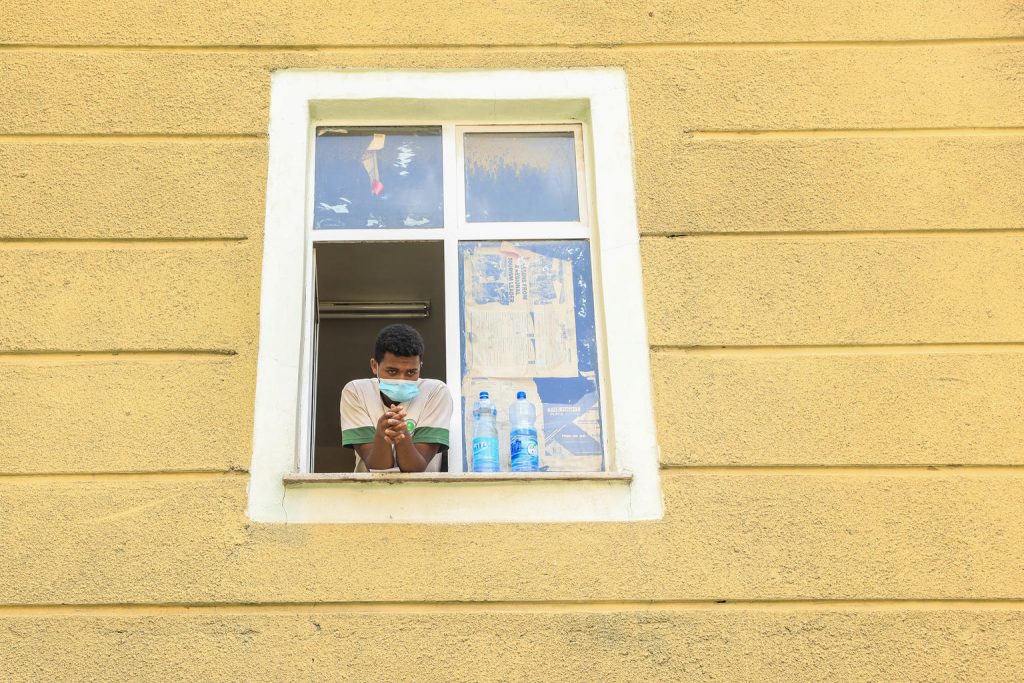
"Communication with communities should be ongoing through all phases of shielding, with recognised community members involved in all decisions around implementation as well as design..."
In the response to COVID-19, there is increasing recognition that the costs of full lockdowns in low- and middle-income countries (LMICs) throughout Africa, Asia, and Latin America may outweigh the benefits, for a number of reasons. "Shielding" has been proposed as a way of protecting those who are at high risk of severe outcomes from COVID-19 (e.g., the elderly and those with underlying health conditions), whilst allowing the wider population to continue or resume some level of economic and social activity. This brief from the Science in Humanitarian Action Platform (SSHAP) considers the rationale for this approach, as well as its feasibility and challenges, particularly in LMICs. The summary below focuses on community engagement/consultation and other communication-related elements of this approach.
Some of the considerations informing the decision include that distancing measures can lead to impoverishment and hunger, social disorder and resistance against measures, oppressive enforcement tactics and detentions, and, ultimately, more deaths from non-COVID-19 related illnesses. These measures can also have the opposite effect to that intended, for example, as migrant workers rendered jobless leave urban centres to return to their rural homes. In overcrowded communities or camp settings with poor sanitation, physical distancing measures would need to achieve very high levels of adherence in order to meaningfully lower transmission.
In the shielding scenario, high-risk individuals would be housed apart from the general population in "green zones", whether at the household, block, or community level. In order to be effective, shielding would have to be widely accepted and practiced, with minimal contact between shielded and unshielded people. If successful, some level of immunity may be achieved in the general population prior to a vaccine being rolled out. Shielding is undertaken as part of a larger strategy that also includes feasible and locally appropriate interventions such as promoting and enabling handwashing, maintaining treatment for other health conditions, asking symptomatic individuals to self-isolate, limiting public transport use, and reducing mass gatherings.
SSHP advises that, ideally, "once a shared understanding of the principles of shielding are established, local authorities and community members would be supported through participatory learning and action to design creative, innovative and locally feasible shielding models that build on existing local practices.." This process of engaging communities; some considerations include:
- Communities should be clearly informed about: the purposes and principles of shielding, the suggested inclusion criteria and possible options, and the likely outcomes if infection occurs. It may be appropriate to begin by discussing shielding as a concept with trusted community actors or leaders, who should be identified through a process of careful and locally informed stakeholder mapping. They can then be proactively engaged to communicate these messages to their communities - e.g., in order to prevent fear; historical contextual factors, such as mistrust of authorities, may cause reluctance to allow a vulnerable family member to move to separate living quarters.
- It may be helpful to work through existing community or neighbourhood organisations, civil society actors, community health worker networks, or Red Cross / Red Crescent volunteers. If appropriate, specific social care committees could be established for the purpose of communicating information about shielding; members of such committees should be well recognised and respected within their communities, and they should provided with support to carry out this role, including with provision of adequate information.
- Part of the process should be to understand existing community-led protection interventions. For example, looking at the Community-Led Ebola Action (CLEA) approaches developed in West Africa and the Community-Led Total Sanitation (CLTS) approaches used in many countries could be instructive. Such interventions could be built upon and adapted to accommodate shielding.
- Once the idea of shielding has been discussed and met with general acceptance, community members could lead the process of identifying high-risk individuals who should be shielded. Or, individuals could self-identify or choose to shield confidentially, due to sensitivities around privacy of health status. Individuals should be shielded on a voluntary basis, and information about their health status disclosed only with their consent.
- Once "green zones" have been identified and equipped, community members, carers, and people identified as high-risk should be provided with adequate information and support on how to uphold infection prevention and control (IPC) measures in the zones. For example, frequent and thorough handwashing should be enabled by providing uninterrupted access to water and soap, and encouraged through appropriate communication.
- Community members can also be involved in providing essential services to those in the green zones (with strict IPC and distancing measures followed). For example, in Turkey, volunteers and police officers go door to door to ensure that its elderly population (over 65), who are required to stay at home, have access to the services they need.
- The community should also be consulted in designing an alert system (in the event a person in the green zone displays COVID-19 symptoms) and response mechanism, which could involve reporting to a community health worker or social care committee member verbally or by phone/SMS.
- Evaluating performance of the shielding model is necessary to know whether the measure requires adaptation; monitoring strategies should be built into the design of the shielding approach by communities, such that they are locally feasible and community-owned.
There are several challenges associated with shielding, which SSHAP outlines - also providing suggestions for mitigating them. For example:
- One challenge is responsibility to perform domestic tasks and provide care; SSHAP notes that civil society, response partners, and the government will need to effectively communicate the importance of shielding to the community and to provide support to families to adapt their domestic roles.
- To offset the psychological impacts of shielding, green zone residents should be given the opportunity to interact with family members at a safe distance while observing IPC measures.
- People assigned to green zones may become associated with the disease and stigmatised as a result. This can have psychosocial effects on individuals, as well as causing them to hide infection if it does occur. In addition to ensuring that the zones are built without dedicated physical barriers around them, SSHAP suggests that efforts should be made to address stigma through effective communication strategies about the need for shielding, and about the disease itself. There may also be opportunities to build on positive sentiments and attitudes, such as of honour and respect for the elderly.
SSHAP website, May 11 2020. Image credit: ©UNICEF/Tesfaye
- Log in to post comments