










































Barnaamijka Xoolaha (The Livestock Programme)
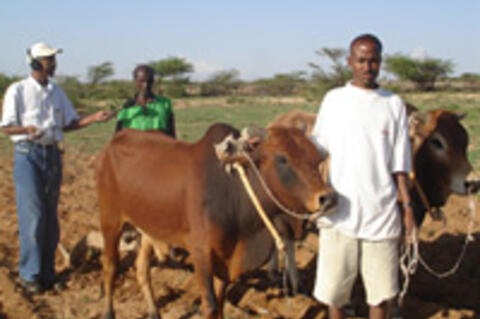
Over a 30-month period, local production staff was trained to produce 130 educational radio programmes for Barnaamijka Xoolaha. The programmes covered information on how to improve the quality and health of livestock, and on issues around animal husbandry, vaccinations, detecting fake drugs, market prices, marketing, business skills, and new economic opportunities.
Barnaamijka Xoolaha included interviews with farmers, vets, and livestock traders. Several panel discussion programmes, designed to enable public debate of key issues relating to the development of the livestock industry, have also been broadcast. Topics covered in the panel discussions have included: market pricing, drought, animal health services, diversification, international support, and degradation of rangeland. Audience feedback was recorded and broadcast to stimulate the discussion and debate.
"Community learning groups" were an important part of the initiative. Five hundred learning groups, where both men and women meet to listen to the programme and discuss the issues raised, were established. Five hundred Somali facilitators were taught how to use the radio-based curriculum to provide face-to-face training to the learning groups across Somaliland, Puntland, and Southern Somalia.
Programme content was guided by an advisory panel, comprised of Somali and international agencies involved in the livestock sector. These included Somali livestock traders, brokers and transporters, Somali chambers of commerce, livestock boards, vet organisations, slaughterhouses, and small business owners (such as milk traders, meat sellers, etc). Programme producers also relied on formative research to provide audience feedback, which helps shape the programme. A consultative committee consisting of representatives from international and Somali non-governmental organisations and other key stakeholders was been set up to review and offer feedback on the content of the programme. Members of the committee include Terra Nuova, Somali Animal Health Services Project (SAHSP), Vetaid, Food Security Analysis Unit for Somalia (FSAU), Pastoral and Environmental Network in the Horn of Africa (PENHA), Candlelight, Hargeisa Voluntary Youth Committee (HAVOYOCO), Hargeisa Academy for Peace and Development, and Somaliland's national veterinary associations. The producers of the programme also maintained contact with all the main livestock markets in Somalia, as well as markets in Yemen and the United Arab Emirates, on a weekly basis.
All the programmes were co-produced and broadcast by the BBC Somali Service.
Agriculture, Economic Development.
An estimated 55% of Somalis are engaged directly in livestock production. However, years of civil war have caused a severe decline in production and marketing infrastructure.
The project was initiated in July 2006 and ran until June 2008.
The African Educational Trust interviewed 600 people involved in the livestock sector in Somalia to assess the impact of the radio programmes. The vast majority - 97% - were from rural areas, and 91% of those respondents said they listened to the radio. According to the survey, the BBC World Service was the most popular station, with 97% of those interviewed listening to the BBC. 79% of those interviewed had heard about the livestock programme, and 63% of respondents had listened to the programme.
BBC Somali Service, Africa Educational Trust, European Union's Rehabilitation Programme
BBC World Service Trust website on May 12 2008.
- Log in to post comments