










































Civic Charter - The Global Framework for People's Participation
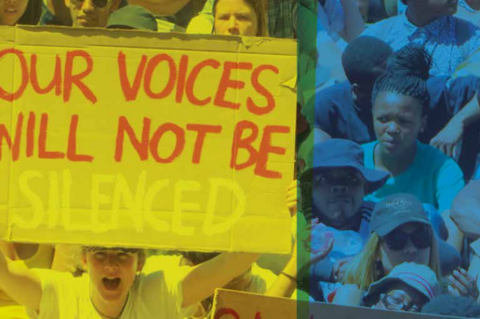
"Securing and expanding the space for civic participation is an indispensable prerequisite for a peaceful future of humanity. Without the active and unrestrained engagement of civil society around the globe, achieving the SDGs [Sustainable Development Goals] and with them the transition towards a just, equitable and sustainable world will not be possible."
The Civic Charter - The Global Framework for People's Participation is a participatory effort to create an international reference point for civil society to allocate their rights within the complexity of international law. The Civic Charter provides a global framework for people's participation in shaping their societies. The two-page document, which people and organisations can sign on to and use as a basis for joint action, articulates a common set of civic and political rights. Based on universally accepted human rights, freedoms, and principles, the Civic Charter serves as a reference point for people claiming their rights. It promotes solidarity among local, national, regional, and global struggles to defend the space for civic participation. It was spearheaded by the Berlin, Germany-based International Civil Society Centre (ICSC), which helps international civil society organisations (ICSOs) maximise their impact for a sustainable and more equitable world.
The Civic Charter is a global document developed by civil society for civil society. It aims to connect those engaged in the everyday struggle for civic space - on a local, national, regional, or international level. While activists and civil society organisations (CSOs) already fight for their space every day within their respective countries and communities, the idea is that the cause could be strengthened when they stand together internationally. As a starting point, while there have been a number of international initiatives launched over recent years to defend civic space, civil society actors were lacking a strong common definition of the terms and shape of the civic space to be defended. To fill this gap, an informal meeting of CSOs that took place in Bangkok, Thailand, in November 2015, asked the ICSC to facilitate the development of a Civic Charter.
The Steering Group, which led the development, had representatives from CIVICUS, International Center for Not-for-Profit Law (ICNL), ActionAid, Amnesty International, Oxfam, Rendir Cuentas, Voluntary Action Network India (VANI), Africa Platform, the Oak Foundation, the Wallace Global Fund, the Heinrich Böll Foundation, and the Open Society Foundations. Throughout 2016, hundreds of civil society stakeholders provided input to enhance the Civic Charter through three rounds of open consultations (online and face-to-face). In the first round, stakeholders were asked what the value of civic participation is, as well as the conditions needed for people's participation in shaping their societies. The survey results, in connection with a desk study on international rights and agreements on people's participation, informed the first draft of the Civic Charter. From April to June 2016, the first draft was then shared online for feedback. A number of face-to-face consultations were conducted, and stakeholders were encouraged to provide feedback through a survey and open comments. The results of this consultation round informed the second draft of the Civic Charter and, at the end of June 2016, a group of civil society professionals and grassroots activists from 13 countries came together in Tanzania to work on how to take the Civic Charter forward. Input from the Tanzania workshop contributed to the third draft, which was once again shared publicly for feedback in July 2016, ensuring that the experience and insights from stakeholders worldwide were mirrored in the final version. The Civic Charter was launched at several national events in October 2016, as well as at the global civil society conference Global Perspectives.
The Civic Charter is available in 16 languages (PDF downloads). Below is a brief summary of the full Charter, which holds that people are entitled to the following rights, which must be respected, protected, promoted, and fully implemented everywhere and without any discrimination:
- Freedom of Expression: Everyone is free to share, discuss, and promote their views and ideas, support the ideas of others, or express dissent.
- Freedom of Information: Everyone has easy and timely access to all public information.
- Freedom of Assembly: Everyone is free to peacefully come together with others to pursue common goals and aspirations.
- Freedom of Association: Everyone is free to form, join, or support organisations to advance common causes in a peaceful manner.
To ensure that all people can enjoy these rights, the following rights can be legitimately claimed as long as they do not infringe on the rights of others, incite hatred, discrimination, hostility, or violence - per the Charter:
- Effective Participation: People and their organisations can genuinely participate in, and influence, public policy and decision-making at local, national, regional, and global levels.
- Financial Support: People and their organisations are free to access or provide financial support, both within and outside of their countries.
- Opportunities for Cooperation: People and their organisations are free to engage in domestic and international dialogue and cooperation.
To make sure that cooperation between people, their governments, and public institutions brings maximum benefits, the following principles must be upheld, per the Charter:
- Duty to Protect: Each government ensures that people and their organisations are free to participate without persecution, torture, or threats to their lives, and are not subject to collective punishment for exercising their fundamental freedoms.
- Enabling Environment: Each state adopts legislative, administrative, and other measures to respect, protect, promote and fulfil the rights and freedoms referred to in this Charter, and investigates attacks on individuals and organisations with a view to bringing suspected perpetrators to justice in line with international standards of fairness.
- Public Accountability: Government, business, and civil society organisations are accountable to the public.
A principle of the Charter is that, whether we are engaged in government, business, or civil society organisations, it is our collective responsibility to secure and contribute to a peaceful, just and sustainable future for us all. Click here to sign on to the Charter as an individual or an organisation.
Everyone is free to use the Civic Charter in a manner that honours its intentions. At the regional and national level, the Civic Charter can be used to underline the universality of people's demands, linking the local struggles to the global ones and utilising the weight of the signatories. It can be used as a tool for advocacy, for awareness-raising, for lobbying governments, for establishing a baseline for interaction with partners, and for many other purposes. It can be used as a tool for awareness-raising, and to educate on people's rights to participate.
As of June 2017, ICSC is beginning a new phase of the project focused on building a community of organisations and activists taking action to defend their civic rights. More information is provided in strategy document [PDF]. Interested people may contact the organisation, above.
Governance and Democracy, Rights
According to ICSC, "[t]he space for civic participation is under threat." According to the CIVICUS State of Civil Society Report 2016, there are "serious threats to one or more civic freedoms in over 100 countries." CSOs and their staff face threats, arrests, frozen bank accounts, revoked licenses, blocked websites, coerced registrations, and closure of their offices. In a 3-year period (2012-2015), over 60 countries introduced restrictive provisions to laws regulating CSOs, and in laws on anti-terrorism, the media, cybercrime, and more. "To justify these laws and restrictive actions, states are driving a narrative that vilifies autonomous CSOs, thus weakening organisations which are powered by the people's will to advance their societies....Through negative campaigning, violent measures and restrictive laws, governments are denying people their inherent right to participate in shaping their societies."
ICSC believes that civil society plays an important role in communicating the needs of the people to the government and - through their continued engagement - ensuring the usefulness and sustainability of political measures. Civil Society actors expose corruption and human rights violations and hold the state accountable - all of which are prerequisites for a just society. Moreover, the active engagement of people in their societies contributes to alleviating poverty, countering the dangers of radicalisation and violence by working with the marginalised and disenfranchised, and protecting the environment.
The development of the Civic Charter was carried out in cooperation with the Heinrich Böll Foundation, the Oak Foundation, the Open Society Foundations, and the Wallace Global Fund.
Posting from Russell Kerkhoven to The Communication Initiative (CI)'s Social Change Network, June 23 2017; emails from Brandi Geurkink to The CI on June 28 2017 and June 29 2017; "The Future of Civic Space", by Burkhard Gnärig, Disrupt&Innovate, September 27 2016; Global Perspectives website; Civic Charter website; and Charter brochure [PDF] - all accessed on June 28 2017.
- Log in to post comments