










































Love Life Caravan
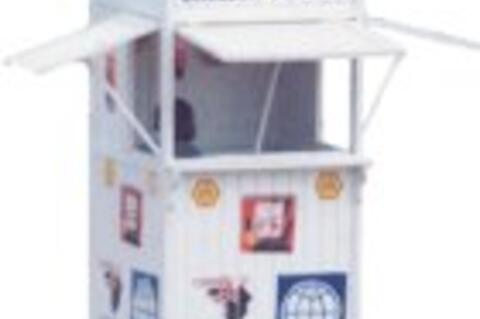
Launched on November 10 2006, the Love Life Caravan was a one month HIV/AIDS “on the road” campaign that aimed to boost HIV/AIDS prevention by improving awareness and achieving a positive change in beliefs, attitudes and practices towards sexual health among people in West Africa. Part of the HIV/AIDS Abidjan-Lagos Corridor Project, the campaign was directed at transporters, travelers, commercial sex workers, uniformed service personnel and the general public. The caravan strategy included communication activities and implementation of voluntary testing and treatment programmes.
The Love Life Caravan comprised of specially equipped vehicles, health experts, volunteers and performing artists. The Love Life team staged live pop concerts, theatre and dance extravaganzas to draw attention and bring information, awareness and practical advice on HIV/AIDS to the people living along or near the 2000km Abidjan – Lagos corridor. The caravan was supported by a mega sound system to enable the message to be carried to the local communities along the route.
Though activities varied at each site, the communication strategies included the following activities:
- educational talks;
- various competitions and games with prizes;
- sketches and puppet shows on HIV/AIDS;
- participation of celebrity actors;
- musical shows presented by well known artists;
- testimony of people living with HIV;
- sports and cultural activities;
- traditional songs and dances on HIV/AIDS;
- film screenings; and
- media broadcast programmes and debates.
Before the caravan set off, a multi-media campaign was launched in the five countries, anchored on a TV programme where top football players like Didier Drogba, Michael Essien, Emmanuel Adebayor, Sydney GOvou, Jay-Jay Okocha and Nwankwo Kanu endorsed the Love Life Caravan and the fight against HIV/AIDS.
The Caravan aimed to increase the visibility of the Corridor project and reinforce the ongoing awareness activities as well as increase participation in prevention, treatment care and support services. It also aimed to advocate for the support of political, administrative, religious and customary authorities as well as reinforce collaboration among stakeholders.
HIV/AIDS.
The campaign coincided with World AIDS Day on December 1 2006 and was expected to reach 100 million people through direct interaction with the public as well as through TV, radio and print media. “An estimated 14 million travelers, transporters and migrant workers are at risk both as a result of being away from home and because the high volume of Corridor traffic attracts sex workers who are themselves more likely to be infected with HIV/AIDS and thereby further spread the disease,” said Dr Justin Koffi, Executive Director for the Abidjan-Lagos Corridor Project.” The Caravan started its one month journey in Abidjan, Côte d’Ivoire on November 10 2006. It then crossed to Benin, Togo and Ghana before finally ending in Lagos, Nigeria on 9th December 2006. 500,000 condoms were distributed freely and an estimated 5,000 people benefited from the voluntary counselling and testing provided by the programme.
Joint United Nations Programme on HIV and AIDS (UNAIDS), The World Bank, Aware, National Action Committee on AIDS, Ghana AIDS Commission, CNLS Togo (Conseil National de Lutte contre le SIDA et les IST), The United States Agency for International Development (USAID), The Economic Community Of West African States (ECOWAS).
- Log in to post comments