










































Norms and Culture - Word of Mouth: Learning from Polio Communication and Community Engagement Initiatives
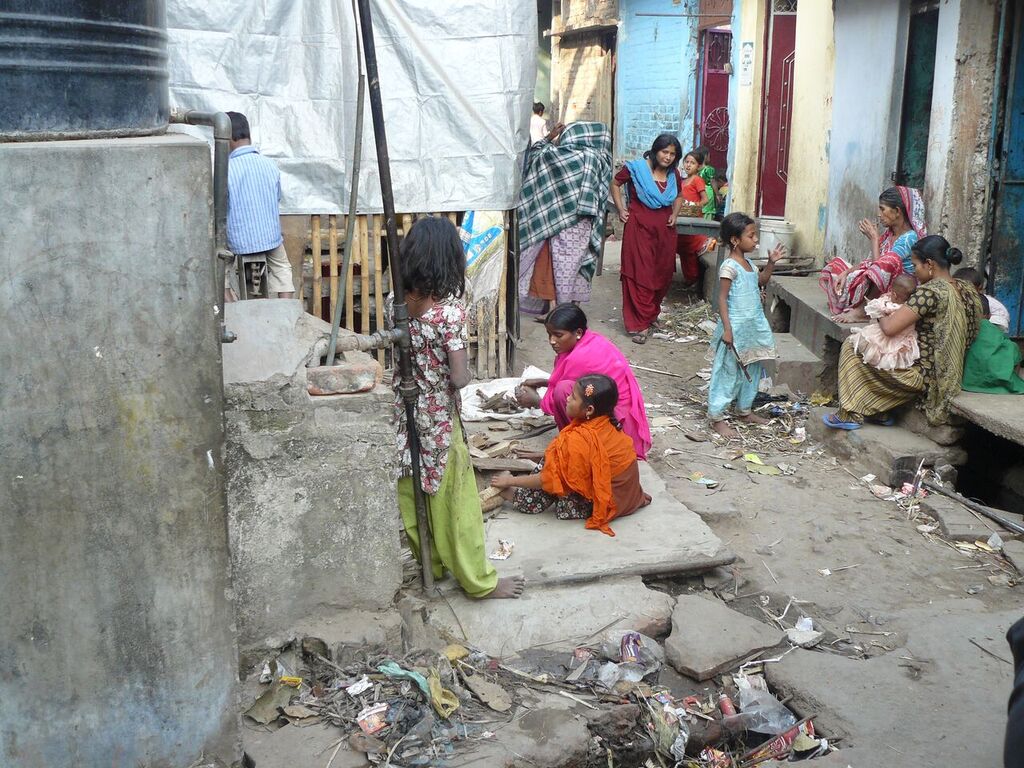
Norms and Culture
One of the most challenging and important areas of focus for any communication and community engagement strategy, on any development issue, is how to demonstrate respect for local culture while working to change predominant social norms that work against public health or other goals. Challenges to a strategic communication and community engagement emerge when, for example, female vaccinators are required in a given culture, but women are not allowed to leave their own homes nor to approach other households; or when newborn vaccination is a priority, but newborn children are not to be seen by anyone outside the family for a specified period after birth. There are many other complicating factors as well. In some settings, for example, the voices of young parents might not be welcome in public forums, or the public status and prestige of doctors predominate, regardless of the quality of their knowledge or opinions.
Polio communication and community engagement have had to face these and other social-norm-related issues, many of them accentuated and amplified because they are embedded in extremely challenging social, economic, and political contexts—particularly for people coming from outside that context. Several examples of the polio program’s work around such issues, along with learning insights, are presented below.
Considering Gender
Public health initiatives must address gender dynamics, but doing so is sometimes tricky. In Quetta, Pakistan, for example, to ensure household access, it was strategically important to significantly increase the number of female vaccinators. The main strategy was to establish a gender balance in the composition of vaccination teams, which created the social space for women to participate in ways that were acceptable to the community and expanded household access.
Recognizing Communication Patterns
As we have all learned from experience, there is no point trying to have a serious discussion at 6 A.M. with someone who is not a morning person. For effective development action, it is necessary to recognize embedded communication patterns. Therefore, polio communication and community engagement efforts sought to recognize and work around such patterns. Results of polio and routine immunization social media research from Ukraine12, which has some of the lowest routine immunization rates in the world, show patterns observed from mothers when conversing about routine immunization:
- In the morning, the focus on social media channels is on specific checks about immunization practices. For example, “Is it OK to immunize if my child has a nose cold or high temperature?”
- In the afternoon, the main emphasis is on checking with other parents and the medical centers about practical issues, such as vaccine availability, and/or sharing their experiences of having their children vaccinated that morning. Some examples include reporting that their child "Cried a lot" or had a "Red blot on the skin," followed by asking, “Is that normal?”
- In the evening, the conversation turned to more reflective discussions on the desirability and safety of vaccination.
These patterns of communication observed on social media, among a key population group associated with immunization (young mothers), provide insights on audiences and their interests at different times that can be effectively tuned for use toward improving immunization practices.
Building Trust
There may be no more frequently used word in the development arena than “trust.” Working hard to gain the trust of families, communities, and local leadership was a central part of the polio program's communication and community engagement effort.
Polio-funded research in Nigeria provided a more nuanced view of the ways in which trust works and grows. A clear correlation was found between the social norm “trust in government” (local, state, and federal) and vaccination decisions—but not in the ways expected.
“We expected to find that propensity to refuse OPV would be associated with lower levels of ‘trust in government’. At both household and settlement level we found the reverse to be the case. Very high-risk [VHR] settlements reported systematically greater trust in government (insofar as they nominated government as most effective provider across all exemplar public services). But we also found that, compared with VLR [very low-risk] settlements, VHR communities manifested systematically lower levels of self-efficacy in terms of faith in government attentiveness or confidence in their ability to affect improvement in circumstances.”13
This social norm highlights the rational processes behind vaccination decisions. Not understanding the underlying thinking—and, perhaps even worse, working on the assumption that polio vaccination decisions are predominantly emotional—most likely hampered the polio strategy.
Safety
For any parent, the prospect of having a foreign object (a needle with vaccine) introduced into his or her child’s body can be scary. It was therefore important to establish the norm that this procedure is very safe. Within the polio strategy, community mobilizers established trust with communities and modeled positive behaviors by having their own children publicly immunized. Seeing mobilizers vaccinating their children gave confidence to other mothers that the practice was safe and effective. The same principle applies when presidents, prime ministers, sultans, and other significant people are shown giving drops (i.e., OPV) to their own children and grandchildren.
The Role of Faith
The polio program placed great weight on engaging religious leaders and linking the necessity of immunization to religious text. This may have been important for creating the space for polio action to take place. But as the following research from Nigeria shows, the polio communication and community engagement strategy, though significant, may have overestimated the extent to which religious social norms influence vaccination decisions:
“The role of religion (both in terms of individual household religious and ethnic identity, and as composite index of households’ ‘intensity of religious observation’) did not appear strongly to influence propensity to refuse OPV. At household level, the ‘intensity of religious observation’ index was not associated with risk of noncompliance... In fact, a higher reported preference for ‘religious leader’ as source of information on religious matters was associated with lower risk of OPV refusal among rural settlements (OR [odds ratio] 0.4, p = 0.000, CI [confidence interval] 0.26-0.6). Urban Sokoto – with the highest household risk for OPV refusal – recorded the lowest mean value for the ‘intensity of religious observation’ index.”14
In effect, this study found that religious leaders have influence on religious matters, but they may have very little influence on health decisions.
Leveraging Natural Spaces
Similar to many other development issues, the polio communication and community engagement strategies attempted to create the space for families and communities to be informed about the benefits and safety of the polio vaccine. There were some successes. However, the complexity and difficulty of the contexts within which the polio program needed to operate, along with the widespread adoption of mobile technology and use of social media, has provided an opportunity to capitalize on the natural social spaces where people connect in their everyday lives.
Research on polio and routine immunization from Ukraine demonstrates this potential:
"[There was] discussion on those (immunization) themes amongst 2,427,431 [online] accounts in parent and city groups … Compared to 4,375 accounts in the polio- and child-health-specific online groups set up by the Ministry of Health and the leading international agencies in Ukraine such as UNICEF and WHO."15
These numbers represent a ratio of 544 to 1 in favor of the natural spaces—that is, the parent and city groups. No competition.
Then there are the actual physical places where people gather. Engaging men with social mobilization and vaccination messages in places where they naturally gather, congregate, and are comfortable is very important. This effort involved working with men who are respected or listened to in the community—for polio communication and engagement, this included barbers in India and clerics and other religious men related to iftar (the evening meal when Muslims end their daily Ramadan fast at sunset) in Nigeria.
Based on the polio experience, we have seen that intimate knowledge of the community, its norms, and the underpinnings of those norms is essential to devising strategies that work. No one-size-fits-all approach can address the challenges inherent to development work; instead, solutions must be driven by community needs and norms.
Editor's note: Above is an excerpt from the July 2018 paper "Word of Mouth: Learning from Polio Communication and Community Engagement Initiatives - Insights and Ideas to Accelerate Action on Other Development Issues", from the United States Agency for International Development (USAID)-supported Maternal and Child Survival Program (MCSP).
- Click here to return to the Table of Contents.
- Click here to go directly to the References page, where endnote information corresponding to the superscript numerals in the text above can be accessed.
Previous section - Social Mobilization
Next section - Community-Based Surveillance
Access the various parts of the document directly:
Access the various parts of the document directly:
- Background
- Social Mobilization
- Norms and Culture
- Community-Based Surveillance
- Data-Driven Strategy
- Operational Oversight
- Conclusion
- References
- Acknowledgments
This paper is made possible by the generous support of the American people through the United States Agency for International Development (USAID) under the terms of the Cooperative Agreement AID-OAA-A-14-00028. The contents are the responsibility of the Maternal and Child Survival Program and do not necessarily reflect the views of USAID or the United States Government.
The Maternal and Child Survival Program (MCSP) is a global USAID initiative to introduce and support high-impact health interventions in 25 priority countries to help prevent child and maternal deaths. MCSP supports programming in maternal, newborn, and child health, immunization, family planning and reproductive health, nutrition, health systems strengthening, water/sanitation/hygiene, malaria, prevention of mother-to-child transmission of HIV, and pediatric HIV care and treatment. MCSP will tackle these issues through approaches that also focus on household and community mobilization, gender integration, and digital health, among others.
Image credit: Chris Morry
- Log in to post comments