










































When Norms Collide: The Effect of Religious Holidays on Compliance with COVID Guidelines
University of the Punjab (Malhi); American University (Aftab); University of East Anglia (Banuri)
"These results contribute to the literature on compliance with guidelines during a pandemic, and carry important lessons for policymakers, especially when confronted with events that carry well established norms that run counter to compliance related behaviour."
The empirical literature highlights 2 main mechanisms through which compliance with restrictions associated with public health efforts during pandemics rises: increased perceived risk and higher trust in authorities. Alongside this, researchers have argued for the importance of social context (in general) and social norms (in particular). Noting that religion-based norms of behaviour have the potential to counteract norms of health-preserving behaviours, this paper investigates the effect of a shift in social/religious norms on compliance with social distancing guidelines in the wake of the COVID-19 pandemic. Specifically, it examines compliance behaviour in the context of the May 24-26 2020 Eid-ul-Fitr (Arabic for "Festival of Breaking Fast") celebrations, which tend to yield an increase in home visits by families, in the Muslim-majority country of Pakistan.
The paper begins by setting the context for COVID-19 in Pakistan and discussing the relevant literature on health-promoting compliance behaviour during pandemics. In brief, on May 23 2020, the day before Eid-ul-Fitr, the Prime Minister Imran Khan announced that Pakistanis should celebrate while maintaining social distancing, even during prayers. Registered COVID-19 cases in Pakistan markedly increased immediately after Eid-ul-Fitr, with a clear spike in cases. The researchers explain that a social norm is what people in a group believe to be typical and appropriate action in their (reference) group. Pakistani society is characterised by hierarchy; going against authority carries fear of sanctions (implicit or explicit). Furthermore, the collectivist society holds deeply entrenched social/religious norms surrounding Eid-ul-Fitr, with expected behaviour including, for example, traveling to visit family members (elders in particular) and close friends, embracing each other as a greeting (including strangers), and sharing food and drink. Eid-ul-Fitr during a pandemic is difficult to navigate, as one would have to break old customs to comply with new behavioural guidelines. In particular, shirking tradition risks offending elders, which usually carries heavy social sanctions.
Furthermore, the specifics of compliance to COVID-19 guidelines have some unique implications in a gendered society like Pakistan. In particular, due to preexisting norms regarding gender differentiation surrounding paid and unpaid work, females spend more time in their own dwelling doing unpaid care work than males. This has implications for compliance to social distancing guidelines during the pandemic, as females already are expected to pay lower costs to adopt social distancing (specifically, leaving home), relative to males.
Sections 3 and 4 of the paper discuss study design details and methodology. In brief, the researchers developed and distributed a 50-item survey instrument to 9 randomly selected heads of departments at Pakistani colleges/universities through an email, who then distributed it among their student bodies. The total sample - 357 participants, with 49% females and an average age of 21 years - is a mixture of responses from core universities (that were directly sent the invitation) and snowball universities (that received the survey through other students).
Section 5 reports on the results, as displayed in Table 5 of the paper, which outlines the respective marginal effects for the logit estimates, where each column represents a compliance indicator, namely, (1) leaves home less frequently, (2) avoids large crowds, (3) avoids physical greetings, (4) wears masks, (5) stops mosque visits, and (6) reduces grocery visits. Controls include risk perceptions, trust, socio-economic indicators, risk preferences, and time preferences (the amount of money (between Rs0 - 50,000) a survey participant would want today instead of receiving Rs 50,000 for sure in (i) 6 months or (ii) in 12 months). In short, the effect of Eid-ul-Fitr is consistently negative across 4 of the 6 compliance indicators. That is, self-reported compliance is lower for participants responding after Eid-ul-Fitr, relative to those responding before, as predicted by religious norms overtaking compliance norms. This finding holds even when controlling for risk perceptions and trust in authorities, which, as noted above, have been previously shown to be associated with compliance-related behaviours.
In terms of gender differences, for reducing leaving home, for example, the percentage of male participants who reported reducing leaving home who responded after Eid-ul-Fitr is lower, but the difference is not significant. However, female participants are more likely to report complying before Eid-ul-Fitr, but those responding after Eid-ul-Fitr are significantly less likely to report compliance. Hence, in this particular case, the reduction in compliance is driven mainly by females. On the other hand, another example of a compliance behaviour, that of physical greetings, indicates that males responding after Eid-ul-Fitr report less compliance than males responding before Eid. Females, by contrast, report higher compliance post-Eid. The researchers explain this finding by noting that the pre-COVID-19 handshake is a deeply entrenched norm in the male psyche, while Pakistani women normally greet from a distance (unless meeting close friends and family). Eid-ul-Fitr norms dictate close greetings among males (hugs instead of handshakes), while they carry no such norms for females. All in all, the results of the survey indicate that Eid-ul-Fitr in Pakistan resulted in a decline in compliance overall, with the effect being driven largely by males.
The researchers stress that their interpretation of the results of the survey is conditional on the assumption that the delays in fielding the survey among the partnering educational institutions follow a random process. Although they further confirm the results by conducting robustness checks incorporating matching techniques, alternative explanations for the findings, which are discussed in Section 6 of the paper, include: (i) differences in institutions pre- and post-Eid, which suggest that the results are driven by unobservable factors; (ii) other events taking place during the month-long window pre- and post-Eid; and/or (iii) post-Eid responses to compliance questions that are specific to behaviour on Eid and are not sustained beyond Eid.
Thus, this study finds that, amid the COVID-19 pandemic, newly formed norms pertaining to healthcare guidelines (focusing on social distancing) emerged, and they were subsequently undercut by longstanding norms of behaviour following a religious celebration: Eid-ul-Fitr. This paper underscores the fragility of these newly emerged norms, especially when challenged by a more well-entrenched, traditional norm. They write, "Naturally, further investigation of the effects of religious events during the pandemic are needed, however, we provide evidence that changes in compliance can follow due to changing norms of behaviour associated with such events, and these changes in compliance are not just a blip, but persist even after the event."
With respect to policy implications, the researchers concede that changing social norms is difficult, but that involving change agents, such as elders in the community, religious leaders, politicians, and scientists, could accelerate the change. "Otherwise, social norms surrounding religious/social gatherings are so well-entrenched that when they come in direct conflict with prescriptions limiting social interactions, such prescriptions are generally overridden."
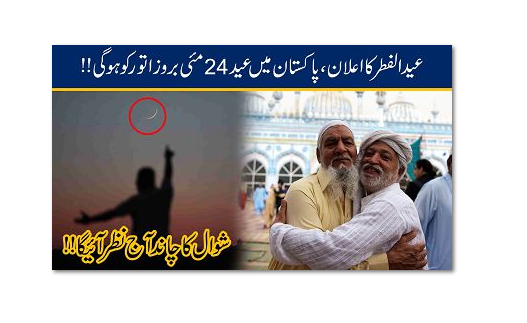
SSRN. Image credit: 24 News HD via YouTube
- Log in to post comments