










































Compliance with Physical Distancing Measures for COVID-19 and Implications for RCCE in Eastern and Southern Africa
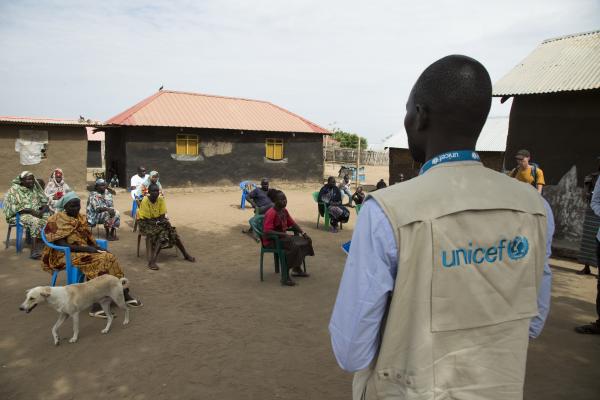
"Distancing measures for an infectious disease outbreak can be unrealistic in many low-and middle-income country settings....Communicating the message is not enough if behaviour change is not feasible."
This brief sets out practical considerations for the formulation of communication strategies and messaging on the subject of physical distancing related to COVID-19 in Eastern and Southern Africa. It takes into account the numerous challenges in the region regarding implementation of distancing measures and mitigation of potential adverse effects - outlining factors that partners working on the COVID-19 response should consider to ensure that approaches to risk communication and community engagement (RCCE) in this context are holistic. The brief was developed for the Social Science in Humanitarian Action Platform (SSHAP) by Anthrologica on request of the United Nations Children's Fund (UNICEF) Eastern and Southern Africa Regional Office.
The brief explains that the term "social distancing" obscures the fact that, while practicing physical distancing, people need to maintain and even increase social proximity through non-physical means (e.g., through social media platforms and communications technology). Also, "social distancing" has in the past been used negatively to refer to the practice of maintaining distance from individuals due to stigma (e.g., because of an illness such as HIV). "Such negative connotations should be actively avoided." For this reason, the brief focuses on "physical distancing".
In March 2020, countries across Southern and Eastern Africa began introducing a range of policies in relation to the COVID-19 pandemic, including: self-isolation for people with symptoms and people vulnerable to contracting the virus; the banning of public or large gatherings or limiting attendance at these; the closure of schools, restaurants, and other public venues; the closure of international borders and airports; and restrictions on internal travel and public transport. Potential or actual negative consequences of distancing may deter people from complying with directives or have long-term detrimental effects if they do so.
More specifically, numerous factors influence compliance with physical distancing measures in Eastern and Southern Africa, including: economic factors, population density, institutions with vulnerable populations (e.g., refugee camps), conflict settings, social structures and networks (e.g., large, multigenerational households and limited housing space), medically vulnerable groups, socially vulnerable groups (e.g., HIV patients who seek treatment confidentially), low levels of trust in authorities and the international response (linked most recently to deep mistrust of the international response to the West Africa (2014-16) and Democratic Republic of Congo (2018-2020) Ebola epidemics), understandings of disease causation and healing (e.g., stemming from religious or cultural beliefs or from conspiracy theories), burials and funerals (whose practices are linked to broader socio-cultural markers), religious beliefs and practices, greetings, mis- and disinformation (e.g., circulating on social media), and community-led distancing measures (which "should be taken into account when designing current distancing measures and related communication strategies").
Suggestions for messaging and community engagement about physical distancing measures:
- Fully explain public health measures and their implications, providing accurate information through trusted channels - e.g., so that people may be more likely to adapt customary behaviours (e.g., related to funerals, greetings, etc.) to reduce risk of disease transmission.
- Take into account the wide range of factors that influence compliance with physical distancing, and include information on measures and support structures that are in place to mitigate the negative effects of distancing.
- Create messages that are clear, simple, practical, specific, and locally contextualised, providing them in local languages and including pictoral representations for illiterate populations.
- Ensure that messages explain why measures are required and how long they will be in place (where possible), and include practical information about what people need to do.
- Emphasise in messaging the importance of social connectedness, social responsibility, and solidarity, considering ways this may be upheld in different contexts.
- Consider the potential psychosocial effects of distancing measures, and encourage actions to mitigate these, including exercise and remote contact with friends and family (e.g., via telephone or the internet when possible).
- Craft messages that take into account and be sensitive to local community understandings of COVID-19.
- Check that messages consider and complement any community-led or religious-led physical distancing measures already in place.
- Tailor key messaging to specific population groups, such as adolescents, the elderly, inhabitants of informal settlements, or influential members of the community.
- In places such as refugee and internally displaced person (IDP) camps, where compliance with physical distancing is challenging, raise awareness about other preventive measures, such as handwashing, and ensure that key behaviours can be facilitated.
Suggestions for engaging and communicating with communities at a distance:
- Use trusted communication methods, channels, and networks, adapting them if necessary so that engagement follows the requirements of local distance policies.
- Encourage influential individuals to: (i) safely share information within their immediate area through their own local channels, or via telephone and online networks; and (ii) share feedback and concerns they receive from people in their networks.
- Consider other methods for information sharing and interpersonal/two-way communication at a safe distance, including: loud speakers, printed materials (e.g., posters and leaflets distributed at health facilities or shops if safe to do so), telephone hotlines, and the internet and social media (e.g., WhatsApp).
- In light of the fact that many people in the region view disease through a religious lens and will receive and trust messages sent by their faith-based leaders, work collaboratively with churches and mosques to provide up-to-date information and to communicate with communities through their various engagement platforms, including social media, television, and radio channels).
- Enlist frontline health workers and other essential workers who must have physical contact with people to engage safely and effectively with community members in their proximity. Brief them on good interpersonal communication, provide them with accurate and up-to-date information, and guide them in how to record and deal with feedback, concerns, or complaints.
The resource concludes with links to a few RCCE guidelines, such as UNICEF's Minimum Quality Standards and Indicators in Community Engagement.
SSHAP website, April 16 2020. Image credit: © UNICEF South Sudan/Chol
- Log in to post comments