










































Yes...Because I can

The programme was developed by the Ministry of Higher Education, Employment and Social Security as a part of its Employment Skills Training Programme, funded by the Asian Development Bank. The campaign - called "Yes...Because I can" - was developed in tandem with a career counselling intervention.
Literature review and research led to the identification of several groups the campaign intended to reach: adolescents and young people, parents, employers, and training providers. The core objective of the campaign was to "brand" work and career development with a spirit of freshness and affirmative action so as to encourage young people to engage in training opportunities and develop work-related skills.
This campaign drew on the attention, interest, desire, and action (AIDA) model of communication. A brand - "Yes" - which is an acronym for Youth Employment Skills (an existing government programme) was created - and then supplemented with "...Because I can" - in an effort to inspire a positive and attitude towards life. A logo centring around the human fingerprint was designed to represent the self and individuality as well as self-empowerment. The logo and slogan were designed to communicate that personal identity is at the core of the concept and that career development is related to finding yourself and becoming "you". All communications were bilingual (Dhivehi - the Maldivian vernacular - and English) and carried the "Yes" logo and slogan.
To accomplish the attention component of the AIDA model, a national launch was conducted that involved the distribution of introductory print and video material (indicating, for instance, the large number of school drop-outs who are left doing nothing). This process involved television spots on the Maldives national network, advertisements in all national newspapers, and distribution of print material in youth "hangouts". One of the mechanisms for generating interest involved young people wearing Yes t-shirts distributing "Zo cards" - a new advertising medium in the Maldives - on the streets, in schools, and at youth hangouts. The newspaper advertisements, television clip, and free postcards all introduced the central communication tools of the campaign: a toll-free telephone number and a website - with the incentive of winning an ipod by using these tools.
To expand briefly on the latter tool, the website is designed to be a place for young people to get familiar with career guidance, learn about themselves and their aptitudes, create a resume (or curriculum vitae) for a job, find tips for a job interview. There is also a career guidance section, information on the main 5 sectors of employment in the Maldives, training opportunities, and information on job opportunities. One strategy involves featuring young people starting their career ladder and "real achievers in our society. Ordinary people who have achieved extraordinary things because they believed in something and worked hard for it!" In short, the site is designed to entertain young people while deciding where they want to "shape their future" - and while learning how to get the skills they need to accomplish that.
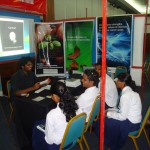
The desire aspect of the AIDA model involved creating motivational print, video, and radio material featuring Maldivian role models from different employment sectors as well as "ordinary" Maldivian young people starting out on a career path. The action element also used some of these same tools (e.g., TV and radio broadcasts and newspaper articles) to move the intended audience to seek career guidance and skills training. Then, 3 national events were held that blended youth-friendly activities (e.g., a fashion show featuring Maldivian work costumes and live music shows) with the exchange of information between potentially employable youth, their parents, training providers, and employers. One activity designed to provide a strong behavioural connotation to saying "yes" was the invitation to all those who attended the events to put their fingerprints on a Yes billboard.
Then, a systematic career development programme was implemented upon the platform created by the "Yes" campaign. A total of 78 high school teachers, social workers, and youth workers were selected from around the country and trained (through a 110-hour certificate course) in the "Yes...for Career Choices" methodology. Specific career development teaching-learning materials were developed that carried the "Yes" slogan and logo. All "Yes" career exploration activities gravitated around the campaign theme: affirmative action for personal growth and development. For example, as part of the counseling programme, students make pictures with their fingerprints and use their fingerprint to discuss the uniqueness of their identity and the importance of taking responsibility for personal growth.
Youth, Economic Development.
According to organisers, "[t]raditionally, the Maldivian government has been the primary employer in the country. However, in the past decade this has changed as there are not sufficient jobs in the government to meet the employment needs of young people who are ready to be employed. The private sector job opportunities mainly fall under highly professional or skilled employment. Skilled job opportunities are not taken by Maldivians. This seems to result from prevailing socio-cultural factors that foster negative mindsets and do not allow the pride of young Maldivians to accept skilled jobs. These jobs are then taken by an expatriate labor force....This leaves a large number of Maldivians unemployed. It is against this background that the government of Maldives identified career guidance and social marketing as possible mechanisms to address the crisis of a skills orientation to employment in the country."
Email from Gideon Arulmani to The Communication Initiative on February 2 2008, including "Capturing the Ripples: Addressing the Sustainability of the Impact of Social Marketing", by Gideon Arulmani and Agisa Abdulla, published in the Social Marketing Quarterly (Volume 13, Issue 4, December 2007, pages 84-107 - available by paid subscription only); the "Yes" website; and email from Gideon Arulmani to The Communication Initiative on July 12 2008.
Comments

Hello!
I found this article extremely interesting and felt very motivated to visit the 'yes, i can' website. It's a very user friendly and informative website and i am sure young Maldivians are benefitting from the whole project. I would be very interested to know how this initiative is going to be taken to the next phase.
Regards,
Tanya Alexander
India
- Log in to post comments