










































Zero Tolerance for FGM

The programme was launched following a situational analysis of FGM in the country conducted by PSI/Mali in 2006. The analysis focused on the current situation in the country as well as the various activities taken on behalf of the Malian government and other actors.
One strategy of the project involves encouraging public discussion and providing an opportunity for the voice of those affected to be heard. The programme had a ceremony on the abandonment of FGM on the International Day against FGM on February 6 2007. The highlight of the ceremony was a presentation made by a 13-year old victim of FGM, who, through a poem, asked her mother why she had excised her and then asked the Ministry authorities how could they tolerate such a practice.
Another strategy has been use of mass media to model desired behaviours and attitudes. In partnernship with Mali's national committee - le Programme National de Lutte contre l'Excision (PNLE) - PSI/Mali has created and aired television and radio spots. One features a grandmother praising her son's wife, who is not excised. Her son agrees, but also mentions how, at first, he had been concerned about it. The grandmother then makes a plea that her granddaughter, named after her, not be excised. The spots began airing on International Women's Day, March 8 2007.
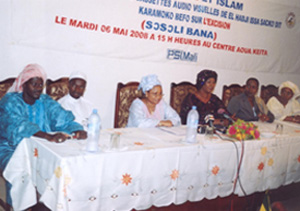
Efforts continued that year to address the widespread belief that female circumcision is obligatory for those practicing Islam. PSI/Mali and its partners organised a workshop entitled "Islam and Excision, According to the Koran and Hadith." Experts and leaders from all 8 regions of the country, as well as Côte d'Ivoire and the Al Azar University of Egypt, participated in the event. PNLE and PSI/Mali then recruited Karamoko Befo, a well-known Muslim preacher in Mali, as their spokesperson against FGM. Befo had previously publicly claimed that female circumcision was obligatory for Muslim families, but, after further study of the Koran and Hadiths, he changed his mind. PSI/Mali worked with Befo to develop a mass media campaign focusing on issues such as lack of evidence in the Koran that female circumcision is obligatory and that the daughters of the prophet were circumcised. The campaign has sparked a debate over the internet, in the local press, and on the radio. To further open the dialogue on FGM, several radio programmes have been broadcast to offer listeners an opportunity to call in with opinions.
Women, Gender, Rights.
PSI/Mali, KfW Entwicklungsbank, le Programme National de Lutte contre l'Excision (PNLE).
"Mali: Zero Tolerance for Female Genital Mutilation", PSI, September 2007 - accessed December 3 2007; and "PSI Fights Female Genital Mutilation in Mali", PSI, August 28 2008 - accessed July 20 2009.
Comments

- Log in to post comments