










































Participatory Budgeting Project
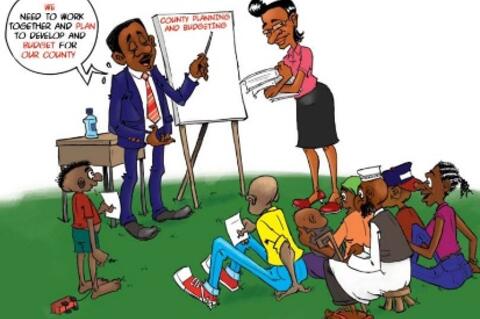
The Constitution of Kenya (2010) calls for citizens to participate in the governance management and decision-making socially, economically, and politically. One of the demands arising from citizens during the Fahamu-led Change Initiative forums was for citizens to be involved in this governance and to be part of determining their own development path. The Participatory Budgeting (PB) project was created in response to these demands, as a way of ensuring that agenda setting begins at the community level.
The Participatory Budgeting process allows communities to work collectively at ward level to decide how to allocate part of a municipal or public budget. "The practice allows citizens to identify, discuss, and prioritize public spending on projects, and gives them the power to make actual decisions on which projects to undertake as a matter of priority." The ward delegates are charged with developing specific spending proposals which will later be presented to the community for validation. If the community approves of the proposals, they are then forwarded to the county government to be considered for implementation.
According to Fahamu, Participatory Budgeting "is a way to involve local citizens in decision-making that is more in-depth and meaningful than traditional consultation processes. This means engaging residents and community groups who represent a diverse cross section of the community to make spending proposals based on the interests of the people, and democratically decide on budgetary allocations. Further the process provides the citizenry with a role in the scrutiny and monitoring of the process and results to inform subsequent decisions on an annual or regular basis."
In order to help guide communities and assist with the process, the project has developed a manual, Facilitating Participatory Budgeting in Kenya: A User Manual.
Democracy and Governance
Fahamu, Kajiado County, Kwale County, Makueni County, Kakamega County, Kisumu County, Kajiado Voices Forum, Msambweni Human Rights Watch, Mamamwiki Links Societym National Youth Sector Alliance,
Endelevu Community Development Services
Fahamu website, Pambazuka News, Februaru 2013, and Fahamu website on June 8 2015.
- Log in to post comments