










































Stop AIDS Caravan
- deepen youth knowledge on HIV/AIDS and sexually transmitted infection (STI) prevention methods in ways that would lead them to adopt less risky habits;
- build stronger solidarity for and acceptance of people living with AIDS; and
- reinforce the implementation of the national strategic plan for the fight against HIV/AIDS.
This programme draws on entertaining activities to inspire young people to keep learning about and working to protect themselves against HIV/AIDS, travelling to where they are and developing appealing messages to fit the local context. The idea is to use music to deliver the message that HIV/AIDS is real and its burden heavy, especially among young people, in a way that schoolchildren can relate to. Some of the caravan's specific messages are customised for different parts of the country. For example, the northern part of Cameroon has a high Moslem concentration, with a growing level of HIV/AIDS, especially among girls. (The campaign organisers believe that girls are more vulnerable, as their education rate is lower than that of boys in Cameroon.) The caravan team has shaped and adapted specific messages for this group.
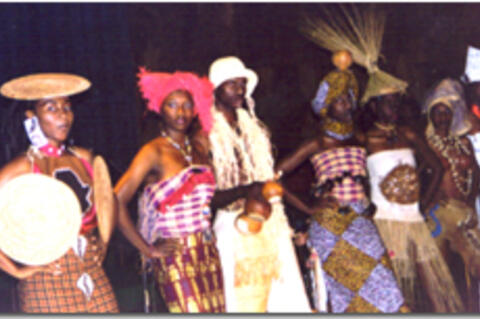
The process involves recruiting young local rap music stars and youth bands for the caravan, which then travels through the 10 provinces of Cameroon to address issues related to HIV/AIDS and how they affect young people. It stops at villages and distributes protection (condoms), pins, brochures, and other information on HIV/AIDS. The team includes students who perform songs, sketches, poems and fashion parades during sensitisation and free mega concert sessions. Youth participation, then, is key; celebrities such as Miss Cameroon have also lent their support.
Other programme activities conducted with school and media participation include:
- Distribution of the Kris Badd music CD titled "NO SIDA" (no AIDS) in Cameroon high schools.
- Distribution of two quarterly magazines, including Entre Nous Jeunes (Among Us Youth), to schools around Yaounde and Douala.
- Production and distribution of HIV/AIDS awareness videos produced by independent TRACE TV, Canal France International, Cameroon Radio Television (CRTV), the United Nations Children's Fund (UNICEF), and the Joint United Nations Programme on HIV/AIDS (UNAIDS) in 5 schools.
- Several investigative pieces by local newspapers Mutations, Herald, and Dikalo and by Radio Africa on the extent of HIV/AIDS in the schools and in the workplace in the provinces that have been neglected by both national programmes and the media.
- Sketches by humorists.
- A contest for the best "message to the youth" between the office's 50 partner schools.
Youth, HIV/AIDS.
The programme aims to build long-term responsible sexual behaviour among youth. "These students are already well-informed and sensitised about HIV/AIDS. What we now want from these children is to empower them and ask them to mobilise their energy to play a more active role in the project in order to make a significant contribution in the fight against the pandemic," said Helene Pieume Matam, the Coordinator of the project.
World Bank website, October 11 2005 and January 20 2010.
Comments

- Log in to post comments